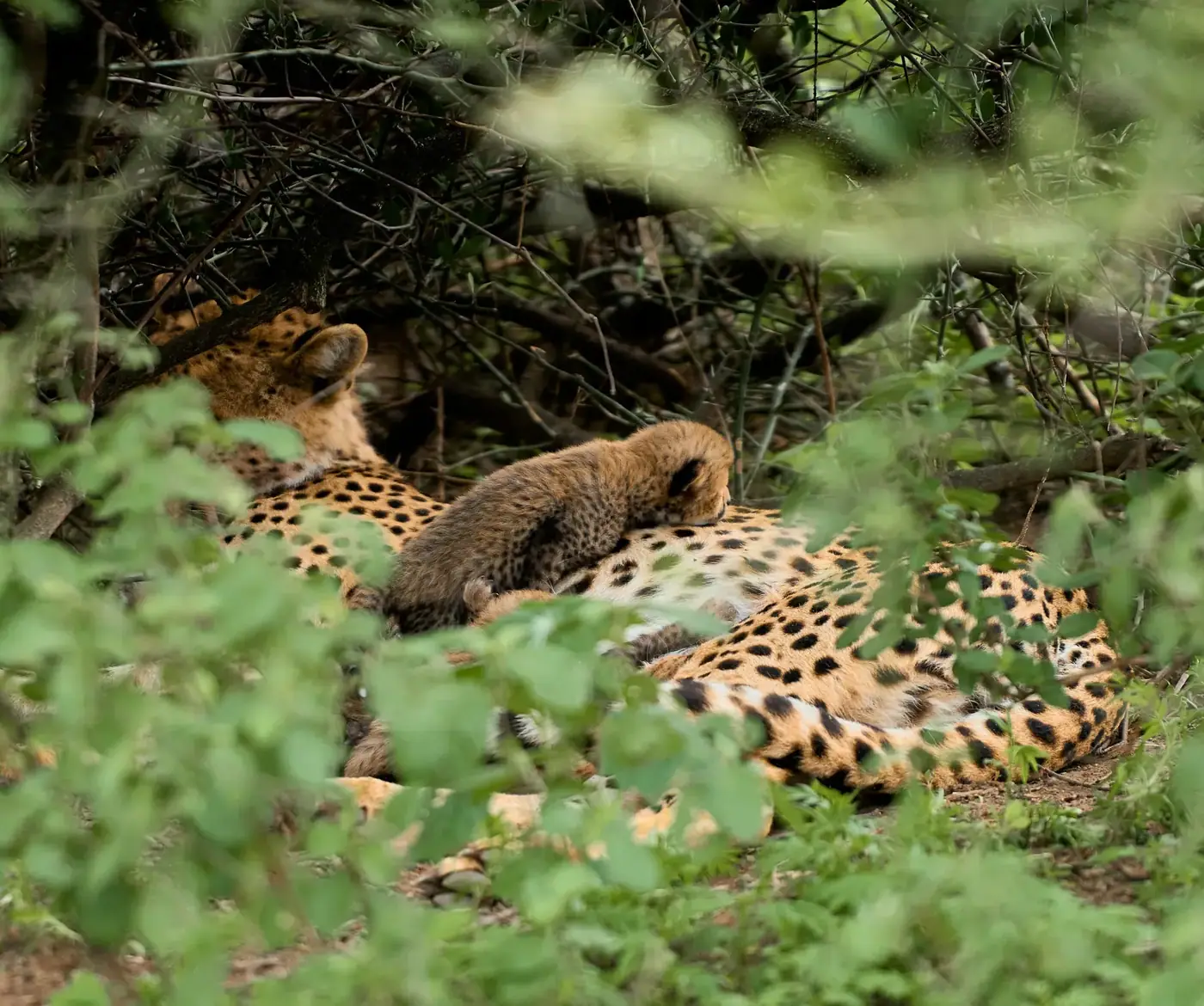
Witness the circle of life across Tanzania's southern plains
- Safari Overview
- Detailed Itinerary
- Safari Pricing
- Safari Destination Map
- What's In and What's Out
- Frequently Asked Questions
- Ready for Your Escape?
Prices start at $3,464 per person
- Overview
- Itinerary
- Pricing
- Destination Map
- Inclusions/Exclusions
- FAQs
01 Safari Overview
This six-day wildlife safari carries you through the Ndutu region while the wildebeest are calving. Each year thousands of wildebeest assemble on these plains to give birth, so the grassland fills with newborns and draws in lions, cheetahs, hyenas and other hunters. With our expert safari team beside you, you have a superb chance to watch these dramatic scenes up close.
Beyond the migration itself, the Southern Serengeti and surrounding country offer landscapes well worth exploring and photographing. You travel to and from Arusha by road, so the whole journey flows smoothly and comfortably, with fine views from the first hour until the last.
02 Detailed Itinerary
Day 1: Arrival in Arusha
Your 6-Day Wildlife Safari for the Ndutu calving season begins with arrival at Kilimanjaro International Airport, where our safari representative collects you and takes you to Gran Meliá Arusha . Relax in the leafy gardens, enjoy views of Mount Meru, or stroll around Arusha town. Come evening, a gourmet dinner and a thorough safari briefing from your guide await.
Extra note: Spend time by the pool or book a spa treatment to recover from your flight.
Overnight:
Day 2: Arusha – Ndutu (Southern Serengeti)
After breakfast on day two, you set out for the Ndutu plains of the Southern Serengeti, well known for wildebeest calving. Elephants, giraffes and zebras may appear along the way. You lunch at Untamed Migration Camp, then go on an afternoon game drive where newborn wildebeest attract lions, cheetahs and hyenas. Dinner is served beneath the African sky.
Extra note: As you continue toward Ndutu, stop at the Ngorongoro viewpoint for some scenic photos.
Overnight:
Meals Included: Breakfast Lunch Dinner
Keep an eye out for zebras, giraffes, elephants, hyenas, cheetahs, lions and wildebeest.
Day 3: Ndutu – Full-Day Safari
The whole of day three is spent on the Ndutu plains. Thousands of calves are born each day, frequently within minutes of each other. You watch lions, cheetahs and hyenas stalk exposed herds, while gentle moments unfold as mothers lead their young. Lunch is a picnic in the bush, and then it is back to camp for dinner and sleep.
Extra note: Early light is perfect for photography, so keep your camera ready for golden-hour shots.
Overnight:
Meals Included: Breakfast Lunch Dinner
Day 4: Ndutu – Central Serengeti
The fourth day starts with one more Ndutu game drive, taking in newborn calves and hunting predators. After a picnic lunch you head toward the Central Serengeti, passing migrating herds, giraffes and elephants. You get to Moyo Tented Camp Stay on Safari in time for sundowners and dinner, followed by a peaceful night deep in the Serengeti wilderness.
Extra note: As you approach the central Serengeti woodlands, watch out for leopards.
Overnight:
Moyo Tented Camp Stay on Safari
Meals Included: Breakfast Lunch Dinner
Day 5: Central Serengeti – Ngorongoro Highlands
You may choose to start with a sunrise hot air balloon safari, which gives wide views of the plains and their wildlife. Breakfast is followed by a game drive in the Central Serengeti, a region rich in predators where lions, cheetahs, leopards and grazing herds are often seen. Once you have had a bush picnic, you travel on to the Ngorongoro Highlands and reach The Retreat at Ngorongoro for dinner and an overnight stay.
Extra note: Before dropping into the highlands, pause along the Ngorongoro Crater rim for sweeping photographs.
Overnight:
Meals Included: Breakfast Lunch Dinner
Day 6: Ngorongoro Crater – Departure
After breakfast you descend 600 metres into Ngorongoro Crater for a morning game drive. This wildlife sanctuary is home to the Big Five, hippos, flamingos and the rare black rhino. Following a picnic lunch you climb back up the rim and head to Arusha. If time permits, you can share a farewell meal before we take you to Kilimanjaro International Airport.
Extra note: Allow a little time in Arusha before leaving to browse for handmade souvenirs.
Wildlife Highlights: Big Five Black Rhino Hippos Flamingos
03 Safari Pricing
A 6-Day Wildlife Safari Timed for Calving Season at Ndutu
Price is for two people sharing | Single supplement: $520
What's Included:
- 5 nights in luxury accommodation
- Meals as set out in the itinerary
- Professional safari guide
- 4x4 safari vehicle with pop-up roof
- All park and conservation fees
- Airport transfers
- Unlimited drinking water on safari
- One-Line Data Bundle
Prices can vary depending on the season and availability
Special Packages
Kenya & Tanzania safari
Reserve your trip now!
Follow the Great Migration across the Serengeti
Reserve your adventure now!
Shared Group/Economy package
Join-In Group Safaris in Tanzania, Shared Costs
Reserve your adventure now!
Economy Safari
Pick your adventure now!
04 Safari Destination Map
Trace Your Safari Route
The six-day calving-season safari to Ndutu has its main stops traced on this clickable map. Your route runs from Arusha via the Ndutu Plains and Central Serengeti to Ngorongoro Crater, taking in Tanzania's most dramatic wildlife regions.
Key Locations:
- Arusha - where you set off
- Ndutu Plains - the calving season spectacle
- Central Serengeti - plentiful wildlife
- Ngorongoro Crater - a Big Five stronghold
Safari Route:
About 800km of Northern Tanzania's best landscapes lie along the route, with game drives in contrasting ecosystems and nights in luxury camps and lodges.
05 What's In and What's Out
Included
Park Fees
Every national park and conservation area fee
Accommodation
All lodging named in the itinerary
Meals
Food is provided precisely as set out in the schedule (D=Dinner, L=Lunch, B=Breakfast)
Transportation
A 4x4 safari vehicle with a pop-up roof is your platform for game viewing
Guide
Water
Unlimited drinking water for the whole safari
Excluded
International Flights
Flights into and out of Tanzania
Visa Fees
Tanzania visa costs (roughly $50-100, depending on nationality)
Travel Insurance
Comprehensive travel and medical cover
Optional Activities
Hot air balloon safari ($500-600 per person)
Tips & Gratuities
Tips for guides, drivers and camp staff
Personal Expenses
06 Frequently Asked Questions
Which months are best for watching wildebeest give birth?
Births normally peak between late January and mid-February, with the bulk of them squeezed into a 2-3 week period. Predators are also most active at that time.
What should I bring on this safari?
Bring neutral-coloured clothes, comfortable shoes for walking, a hat, sun cream, binoculars, a camera with memory cards and extra batteries, any medication you personally need, and a warm jacket for the cool hours at the start and end of the day.
What vehicles do you use?
Our purpose-built 4x4 safari vehicles have pop-up roofs for excellent game viewing, a guaranteed window seat for every guest, and sockets for charging your devices.
Is the safari suitable for children?
Yes, though we advise a minimum age of 8 so children get the most from it. Given notice, we can organise child-friendly accommodation and activities.
How comfortable is the accommodation?
Our choice falls on well-run tented camps and lodges that are comfortable while staying faithful to the spirit of safari. All rooms come with private bathrooms and comfy beds.
What health precautions are advisable?
Ask a travel clinic for advice on vaccines, such as hepatitis A, typhoid and yellow fever, and on malaria prevention. Do also bring insect repellent and your regular medicines.
07 Ready for Your Escape?
Plan this with a local team
Send us your dates and the size of your group, and within one working day you will have a clear itinerary and price from us.